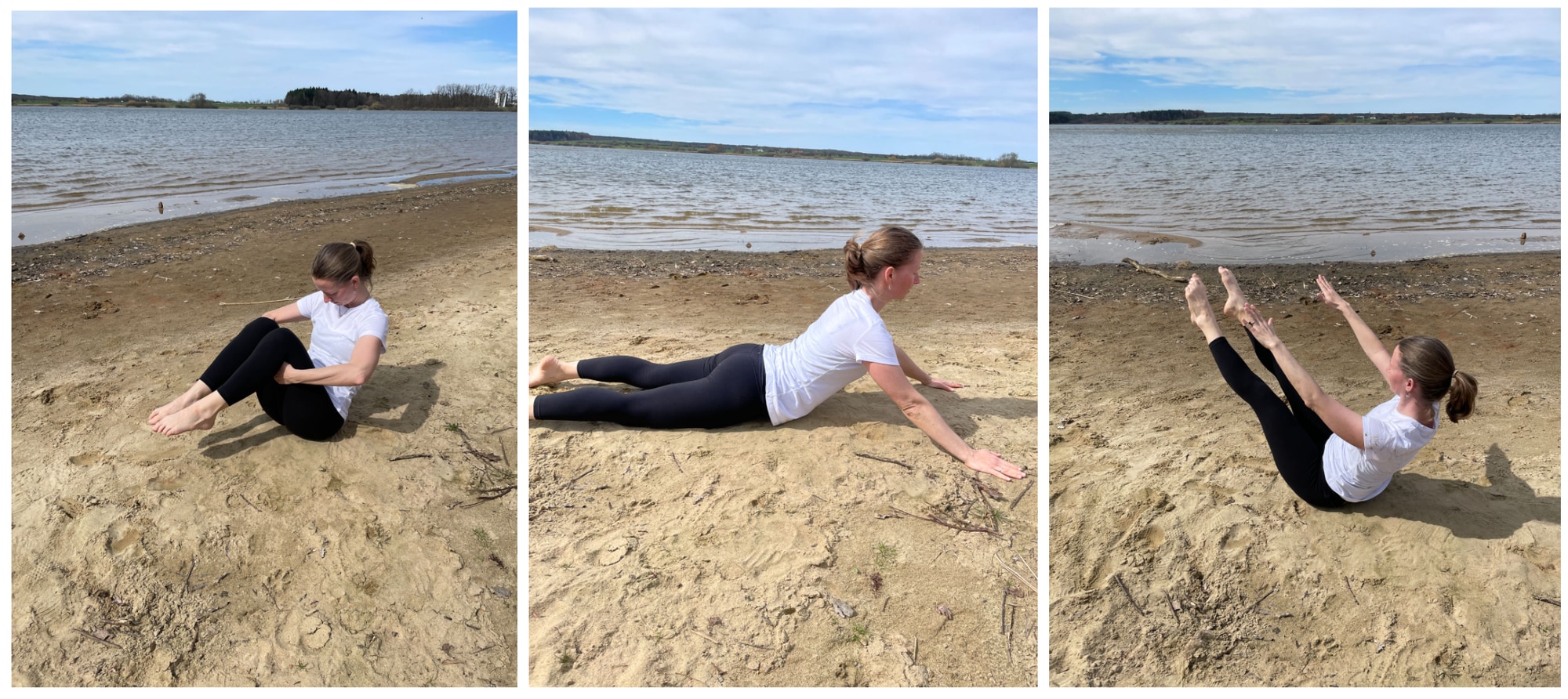
What Is This Article About?
This article will help you understand what the classical Pilates mat sequence is, where it comes from, and why it still holds an important place in today's fitness world. You will also learn why I personally consider it one of the most effective forms of exercise and what lies behind the term March Matness.
If you practice Pilates, understanding the classical sequence will help you see your training in a broader context. It is not just a collection of individual exercises, but a thoughtfully designed system with logic, history, and a deeper purpose.
What Is The Classical Pilates Mat Sequence?
The classical Pilates mat sequence is the original series of exercises created by Joseph Pilates. It consists of 34 exercises that follow one another in a specific order and together form a comprehensive full-body workout.
Each exercise has its own place and purpose, from activating the core and mobilizing the spine to developing strength, stability, and coordination. From the very first exercises, you establish a rhythm, engage your core, and connect your breath with movement. Throughout the sequence, the entire body is challenged and trained in a balanced way.
The sequence begins with the so-called Hundred. This exercise awakens the whole body, stimulates the breath, and gets your energy flowing.
The complete sequence is described in the book Return to Life Through Contrology, written by Joseph H. Pilates and William John Miller. The first edition was published in 1945.
Why The Classical Sequence Is Still Relevant?
I believe that a sequence created more than 80 years ago remains highly relevant today. Modern lifestyles, characterized by prolonged sitting, a lack of natural movement, and repetitive patterns of physical strain, often lead to issues that the classical Pilates sequence addresses very effectively.
It focuses on:
- Activating the deep stabilizing muscles
- Improving spinal mobility and movement in all directions
- Connecting breath and movement for greater fluidity
- Developing coordination and integrating the body as a whole
- Performing movements with awareness, control, and precision
Today, we often encounter modern approaches to Pilates known as contemporary Pilates. In contemporary Pilates, exercises are modified, combined, and adapted in various ways. There is absolutely nothing wrong with this—in fact, I teach contemporary Pilates classes myself.
However, the classical sequence remains the foundation that practitioners can always return to and continue learning from. Its fixed structure provides a clear framework for practice, making it easier to track progress and gradually refine technique over time.
Why I Love the Classical Sequence?
The classical Pilates mat sequence is a bit like a constant in the middle of chaos for me. Whenever I'm not quite sure what my body needs, I can always come back to it.
It has a way of waking me up and giving me energy, even on days when I don't really feel like exercising. At the same time, I have to admit that completing the entire sequence is genuinely challenging—not only physically, but mentally as well.
And that's exactly why I love it. Sometimes I do just the first few exercises, and even that is enough to give me a quick reset.
What Is March Matness?
March Matness is a global challenge that takes place on social media every year throughout the month of March. Each day is dedicated to one exercise from the classical Pilates mat sequence.
Pilates practitioners and instructors from around the world share their versions of the exercises, inspire one another, and celebrate the original Pilates method. It's a wonderful way to work through the entire sequence, deepen your practice, and become part of a global community.
Follow me on Instagram in March to join the challenge. And if it's not March, you'll still find a year-round recap and plenty of inspiration on my profile.
Here is the traditional list of the 34 classical Pilates mat exercises as presented by Joseph Pilates in Return to Life Through Contrology:
- The Hundred
- The Roll-Up
- The Roll-Over
- One Leg Circle
- Rolling Like a Ball
- Single Leg Stretch
- Double Leg Stretch
- Spine Stretch Forward
- Open Leg Rocker
- Corkscrew
- The Saw
- Swan Dive
- Single Leg Kick
- Double Leg Kick
- Neck Pull
- Scissors
- Bicycle
- Shoulder Bridge
- Spine Twist
- Jack Knife
- Side Kick
- Teaser
- Hip Twist
- Swimming
- Leg Pull Front
- Leg Pull Back
- Side Kick Kneeling
- Side Bend
- Boomerang
- Seal
- Crab
- Rocking
- Control Balance
- Push-Up